Take a look over our press releases and campaigning activities.
4 September 2026
Morgen Evans
Social media will be banned for under 16s. But what will this actually do for children?
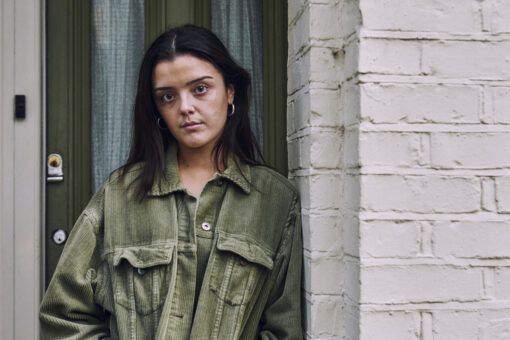
June 2026 saw one of the most hotly debated announcements of Keir Starmer’s tenure as Prime Minister: the Government will introduce a social media ban for all under 16s across the UK. And with Andy Burnham confirming he will be carrying it forward, I’m interested to know what people’s thoughts are.
First the facts: it will cover platforms where young people post content and chat with other people – Snapchat, TikTok, Instagram, Facebook and YouTube – with messaging platforms like Discord and Reddit not currently included. The bill is due to pass through Parliament before Christmas, with the ban coming into effect in spring 2027. It sits alongside other recent measures aimed at protecting children online, including the age verification checks introduced under the Online Safety Act, which since July 2025 have required pornography sites and other platforms hosting adult content to confirm users are over 18.
At Frontline, we work to support children at risk of harm. Sadly none of these online harms are new: cyberbullying, exploitation, grooming, radicalisation and exposure to inappropriate content have shaped childhood online for a couple of decades. What has changed is the constant, everyday presence of smartphones, which put the internet and social media within arm’s reach at almost every waking moment. Recent ONS data states that over 30% of children report being online “almost all the time” during the week.
The ban has been framed, on both sides, as a straightforward call. Supporters treat it as overdue protection, critics treat it as overreach. But, neither framing is supported by indisputable evidence. In order to understand what the potential impact might be, we spent some time speaking to some young people with lived experience and also professionals who support children at risk of harm. And from this, we saw that the honest picture feels messier: the ban might reduce some harms, quite possibly increase others, but it won’t change the underlying question of how children are kept safe once they’re online: which, banned or not, many of them still will be.
The case for the ban is real, not manufactured
The argument for a ban has its foundation in genuine concern about harm to children. Children’s minister – and Frontline’s founder – Josh MacAlister MP was making this case as far back as October 2024, warning that the evidence on doom-scrolling and harm was already mounting, and drawing a direct comparison to seatbelt legislation. Bereaved parents who’ve lost children to online harm, including Ellen Roome, whose 14-year-old son Jools died after taking part in an online challenge, have called the ban a long overdue win.
That view is shared by some of the young people the ban is meant to protect. Lucy, 23, a member of Frontline’s Young People’s Advisory Board, told us social media is “destroying this generation,” and that a difficult adjustment period would be worth it for what comes after.
There’s a coherent safeguarding logic underneath all of this. Children and teenagers are not yet operating with an adult’s capacity to weigh risk. Frontline’s chief social worker, Lisa Hackett, worries about the “adultification” of young people using online spaces: i.e. expecting them to act with the maturity and responsibility of an adult when there are still developing cognitively and emotionally. So, on that basis, removing the platforms that expose children to risks like predatory contact, sexually explicit or self-harm content, or where they could have personal information revealed, is arguably a defensible use of the state’s protective role.
But a ban challenges access, not risk
However, when a ban actually comes into reality, the case becomes less clear.
Consider what the ban removes for a young person who has an eating disorder, who is experiencing an acute mental health crisis, or who simply doesn’t have an in-person friendship group to fall back on. Juliet, a Frontline fellow now working in child and adolescent mental health services, told us that, for these young people, social media isn’t a supplementary way to connect, it’s sometimes the only one. One young person she supports has an eating disorder that’s “incredibly complicated” and bound up with social media in a way that cuts both ways: it’s the only community that understands her, but it’s also where she comes across pro-eating-disorder content and group chats. A blanket ban doesn’t discriminate; it removes the good half along with the bad.
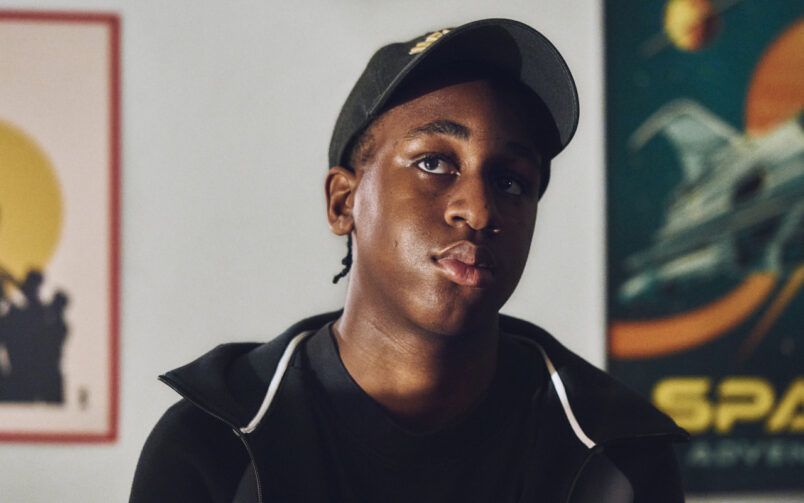
Young people themselves described this less as a debate and more as a trade-off. One 15-year-old told us “you can’t really live without social media sometimes”. Social media is simply the place where friendships, shared jokes and a sense of belonging now develop. But it must be said, none of the young people we spoke to romanticised the platforms; they were clear-eyed about the distressing content, conflict and unwanted interactions that come with them. But being clear-eyed about the downsides didn’t make the platforms feel any less essential, because for this generation the two aren’t separable in the way an adult who didn’t grow up online might assume. As one young person put it to us, the “older generation… they don’t understand how it works.”
Then there’s the question of whether the ban will actually keep the platforms out of children’s hands at all. Australia became the first country to introduce an under-16s ban, in December 2025. Within months, researchers at the University of Newcastle Australia found that eight in ten Australian teenagers were still accessing social media, using VPNs, borrowed accounts and misrepresented ages to get around it. NSPCC chief executive, Chris Sherwood, has flagged the obvious consequence: children who slip past restrictions still need to land somewhere safe, and a ban that assumes they won’t slip past it isn’t planning for the reality it’s created.
That combination – a ban that some young people will inevitably get around, which disproportionately affects the young people with the fewest offline alternatives – is the crux of the problem. Frontline fellow Juliet’s assessment is that a blanket ban is “attacking the situation with a sledgehammer, when something a bit more subtle is needed.” She doesn’t dismiss the safeguarding case; she’s worked in councils where gang violence and criminal exploitation of children were prevalent, and she sees real value in reducing the chance of a child’s location or personal information being exposed online. But her view, and the view several of the young people we spoke to, is that the deeper problem sits not with social media itself, but the way the platforms are managed: their advertising models, their algorithms pushing extreme and violent content, their consistent failure to build in safety by design. That’s the case Juliet would apply to young people tragically taking part in risky challenges online – it was the platform’s algorithm that amplified the challenge that led to their deaths, which suggests the more durable fix is holding platforms accountable for what they promote, not only restricting who’s allowed to log on.
The deeper problem sits not with social media itself, but the way the platforms are managed.
The risk of silence
But there’s another issue that hasn’t had much airtime in the national conversation, and it’s the one that concerns us most directly as a children’s charity.
Juliet raised this directly: what happens if young people becoming more reluctant to tell trusted adults about something bad that happened on social media, because doing so means confessing to breaking the rules first. The young people we spoke also identified this risk. Asked what impact a ban might have on their relationships with adults, one 15-year-old said it plainly: it’s “going to create distance between the child and the carers.”
And this challenge isn’t a hypothetical, future problem. It’s a reality social workers already navigate elsewhere: distinguishing, for example, a child being exploited into selling drugs from a child simply using them, so the rule they’ve broken doesn’t overshadow the harm done to them. A ban that isn’t accompanied by a deliberate effort to encourage disclosure risks actually ends up working against its own purpose.
What needs to happen now
Whatever view you take on the ban itself, we think three things need to be part it’s implementation:
- Better training and guidance for parents and professionals – they need practical knowledge of platform risks, and the common ways children work around restrictions, not just awareness that the restrictions exist.
- Permission to use professional judgement – if every child who discloses using a banned platform triggers a rigid compliance process, professionals will end up penalising the wrong thing. A child’s presence on a banned platform should be a starting point for conversation, not a compliance issue.
- Continued pressure on platform safety – removing child sexual abuse material and fixing algorithmic harm has to continue, regardless of whether under-16s are formally banned, because the platforms don’t stop being dangerous just because access is restricted.
Lisa Hackett put the underlying principle simply: “…young people will keep testing boundaries and keep finding ways online. That’s part of growing up, and no policy will change it. The job isn’t to pretend a ban stops that; it’s to make sure youth workers, social workers and parents are having these conversations directly with young people, so they’re not navigating it alone”.
And that’s ultimately where our interest at Frontline lies. Whatever version of this policy lands in spring 2027, we want social workers and other professionals working alongside young people, to feel equipped to support them through it, not caught out by it. We must take seriously both what the ban might prevent and what it might make harder to see. That means services need to start now, in the lead up to next spring, working out how they’ll support children through the transition, rather than waiting for the ban to land and reacting to it.