Apply now to join our 2027 cohort. Locations close as they reach capacity, so we recommend completing your application as soon as possible.
20 November 2026
Approach Social Work
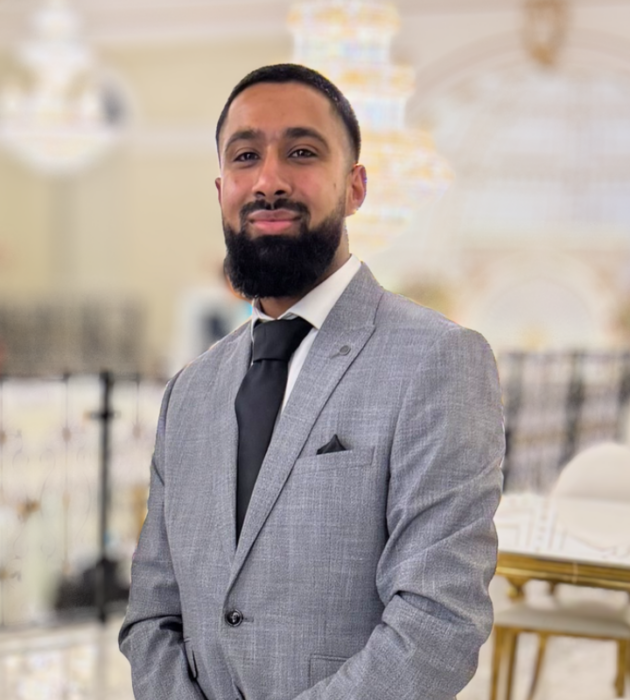
Huzaifah: One year on, I’ve learnt you don’t need to have all the answers
Huzaifah began his journey on Approach Social Work in Kirklees in 2025. After his first 12 months on the programme, he reflects on how his understanding of social work has changed, the moments that have stayed with him and how far he has come.
When I wrote at the start of Approach Social Work that I was ready for the challenge, I was excited and nervous about what the next 12 months would bring. I knew social work would be challenging, but I don’t think I fully understood what that meant until I started working with children and families.
One year on, I’ve learnt that being ready for the challenge means being comfortable with not always having the answer. It means asking questions, listening to feedback and being willing to keep learning.
Social work is about so much more than people think
One of the biggest myths about social work is that social workers are just there to take children away from their families.
Actually, the role is mainly about building relationships, listening to children and families, understanding what is happening in their lives and working with them to make things better.
I remember working with a child with speech and language needs and using a creative activity to help them communicate. We drew a house containing things that worried them and another of their dreams. The child enjoyed the activity, engaged with me and shared things about his life that he might not have told me in a normal conversation. I was so pleased to have created a space where he felt safe and comfortable, without any pressure. It reminded me that we need to adapt to the child, rather than expect them to communicate in the way that works best for us.
Keeping the child at the centre
One of the biggest milestones of my first year was completing my first Child Impact Report. I worked with a family facing complicated issues related to the parents’ relationship and the child’s experiences of that. I spent time getting to know the family, working directly with the child and speaking with both parents.
Writing such a substantial piece of work for the first time and contributing to recommendations for the court felt like a big responsibility. I saw how important it is that a child’s wishes and feelings aren’t lost amongst the adults’ differing perspectives. Children can experience family circumstances very differently from how adults see them. I realised the responsibility involved in accurately representing what a child communicates, even when their views might be difficult for adults to hear.
Working alongside my consultant social worker helped me develop my analysis and build confidence. It also taught me that seeking guidance is part of good practice. I don’t need to have all the answers.
Bringing different perspectives to social work
Previously, I wrote about the importance of children and families seeing themselves reflected in the professionals they work with. Working with families from different cultural and religious backgrounds has reinforced that for me, but it has also taught me not to make assumptions.
Even when you share similarities in ethnicity, religion, language or cultural background, family experiences can be very different. Conversations with parents about their values, upbringing, traditions and expectations have shown me that what feels familiar to me isn’t necessarily experienced in the same way by someone else.
For me, representation is about bringing your own experiences into the profession while staying curious about the person in front of you. Cultural awareness isn’t about assuming you know someone’s background. It’s about being willing to learn from them and recognising that families are the experts in their own lived experiences.
The people who have supported me
I genuinely don’t think I would have got through my first year on Approach Social Work without my hub, my consultant social worker and my practice tutor.
My hub has been a source of friendship, advice and reassurance. We’ve shared the challenges of placement and university work, celebrated the little wins, had a laugh and supported one another when things felt overwhelming. It’s been invaluable having people around who genuinely understand the journey.
I can’t thank my consultant social worker enough for their patience, guidance and encouragement. From answering my endless questions and listening when I overthink things, to challenging me, pushing me outside my comfort zone and reminding me of my capabilities. Having someone who created a safe space to learn, make mistakes and grow has meant so much.
My practice tutor at Frontline has also helped me reflect on my experiences, connect theory with practice and think more critically about my work. I’m grateful for their encouragement to challenge myself, recognise my strengths and develop my confidence and professional identity.
I left my first year with a qualification and valuable experience, but also with huge appreciation for the people who supported me. I genuinely couldn’t have asked for a better support network.
Take the step and trust the process
If I could give myself some advice in year one, I’d say not to put so much pressure on yourself to know everything straight away. Starting something new can be daunting, especially when you’re working with children and families and want to get things right. But you learn as you go. Asking questions, using supervision and reflecting on your practice are all part of the process.
For anyone from a similar background to me who is considering applying to Approach Social Work, I’d say go for it.
Coming straight from university, I wanted a career where I could keep learning, challenge myself and make a meaningful difference in people’s lives. I’m really glad I took the step because I’ve had the opportunity to put theory into practice, work with children and families from different backgrounds and develop both professionally and personally.
Approach Social Work has given me much more than a qualification. It’s helped me develop the knowledge, skills, confidence and values I want to carry throughout my career.